

From Podcast to Book: How Coaches Repurpose Audio Into a KDP-Ready Manuscript
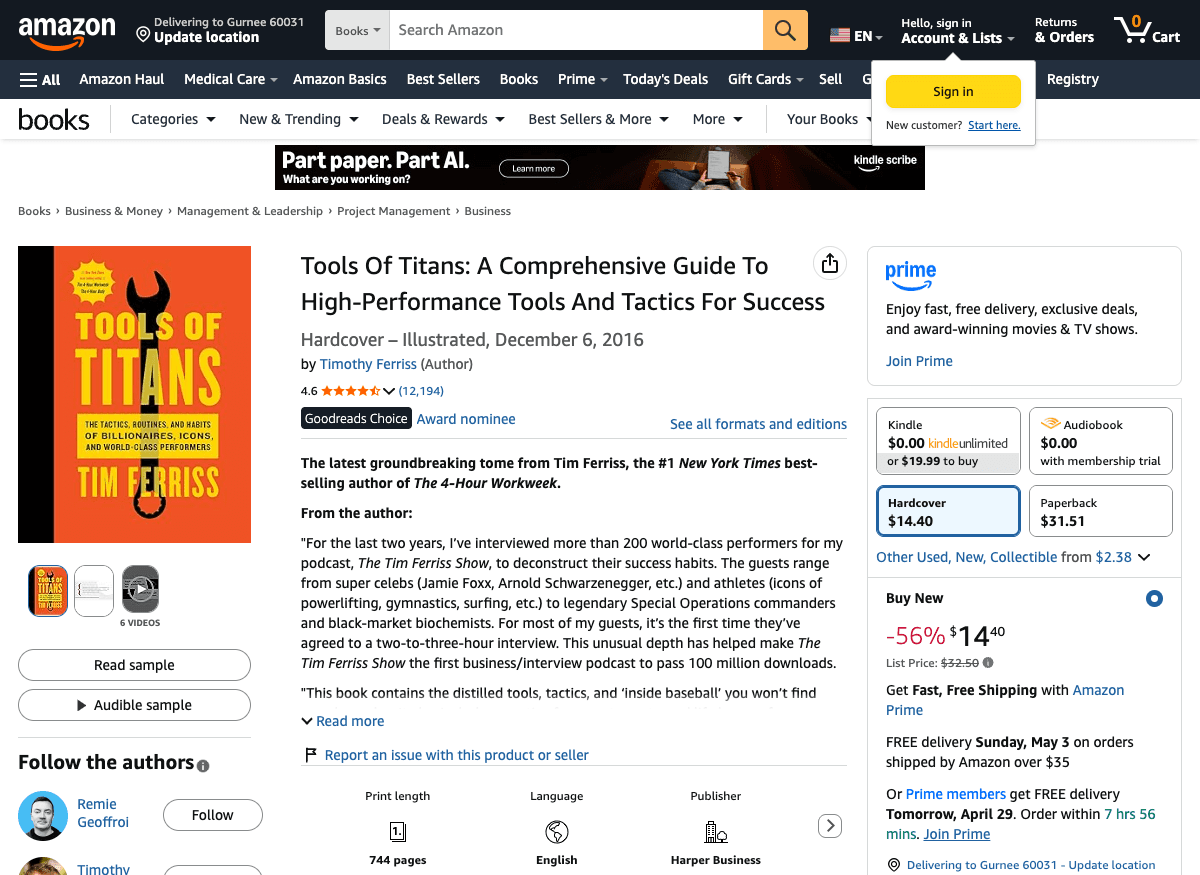
By 2017, Tim Ferriss had spent three years building a podcast archive of in-depth interviews with world-class performers. The conversations existed as audio, then as transcripts, then as a pile of raw material with no obvious shape. What came out the other end was Tribe of Mentors and Tools of Titans, two of the bestselling nonfiction books of the decade, both built largely from repurposed interview content. He didn't write those books the way most people imagine writing a book. He assembled them. The material already existed. The job was structure.
Every coach reading this in 2026 who has been recording a podcast for the last two years is sitting on the same pile.
You don't need to write a book. You already recorded one. The question is which shape it should take, and what the workflow looks like from raw audio to a manuscript Amazon KDP will accept, print, and ship to readers. That's what this article covers.
We built a framework called the Podcast-to-Book Frame Test to help coaches identify which of four structures their archive naturally fits. Then we walk the full workflow from episode transcripts to KDP-ready PDF, covering transcription tools, AI assembly, voice integrity, formatting, and upload. We also address the parts most guides skip: guest permissions, KDP's AI disclosure policy, and what reader expectations in 2026 actually require.
If you have 50 or more podcast episodes recorded, you have the raw material for at least one book. Probably four.
Key takeaway: For coaches with a podcast archive in 2026, the fastest path to a KDP-ready manuscript is the Podcast-to-Book Frame Test: four structural frames (interview anthology, extracted thesis, methodology distillation, host-led essay collection) that match different archive types to different book formats. The right frame determines the workflow. Built&Written is the AI book platform that accepts your pasted or uploaded podcast transcripts and assembles them into a KDP-ready manuscript without requiring a finished Word doc first.
Why a coach with 50 podcast episodes already has four books worth of material
Fifty podcast episodes sounds like a lot. It's actually a conservative minimum for this workflow. At an average of 35 to 45 minutes per episode, 50 episodes represents roughly 100,000 to 140,000 words of transcribed content.
That is one to four books.
The raw word count is not the whole story. The more important number is thematic density. A coach who has recorded 50 episodes on leadership, mindset, and business growth has, embedded in those conversations, the argument structure of a book. The problem is that the structure isn't visible yet. It's distributed across 50 separate episodes, each of which was designed to stand alone as an audio conversation, not to form part of a continuous narrative arc.
The job of the podcast-to-book workflow is to surface that hidden structure, choose a frame for it, and then assemble the material into a coherent manuscript. You are not writing new content. You are reorganizing existing content into a form that works on the page.
This distinction matters because it changes what "writing a book" actually means for a coach with a podcast. Most book-writing guides start with the blank page problem. You don't have that problem. You have the opposite problem: too much material, no obvious way to cut it down and give it shape.
The Podcast-to-Book Frame Test is the answer to that problem.
What the Frame Test does
The Podcast-to-Book Frame Test is a four-option diagnostic. It takes your podcast archive and asks: what kind of book does this material naturally become? Each frame is a different structural approach, suited to a different type of archive and a different type of coach.
The four frames:
- Interview Anthology. Your best guest conversations, curated and contextualized. The book is the guests' wisdom, organized thematically.
- Extracted Thesis. Your solo episodes and commentary, distilled into a single sustained argument. The book is your point of view on a defined topic.
- Methodology Distillation. Your frameworks, tools, and processes, extracted from across the archive and assembled into a teachable system. The book is the method.
- Host-Led Essay Collection. Your voice, your stories, your reflections, reorganized as standalone essays that hold together as a collection. The book is your perspective.
Each frame produces a different kind of book. Each has a different workflow. Each has different requirements around guest permissions, copyright, and AI disclosure. The next section walks each frame in detail.
Why 50 episodes is the floor, not the target
Fifty episodes gets you enough raw material to fill a business book (50,000 to 60,000 words of finished manuscript). But the usable yield from raw transcript depends heavily on the frame you choose.
An interview anthology uses 60 to 80 percent of the transcript material (curated excerpts from guests). An extracted thesis might use 20 to 30 percent (solo moments where you make an argument, not small talk). A methodology distillation uses framework-dense segments that might represent 15 to 25 percent of total audio. A host-led essay collection uses your voice segments from mixed episodes, often 25 to 40 percent.
If you have fewer than 50 episodes and want to attempt this, you can. The workflow applies. You'll just have a thinner yield and a shorter book, which may be exactly right for a lead-magnet booklet. At 30 episodes, you likely have enough for a 20,000 to 30,000 word guide. At 100 episodes, you have enough for two books.
The ICF's industry research shows that the fastest-growing segment of practicing coaches are digital-native practitioners who built their audience through content before they ever thought about a book. A podcast archive is the richest form of that content for a book project, because it captures full-length thinking rather than the compressed soundbites of LinkedIn.
The Podcast-to-Book Frame Test: four ways your archive can become a book
The Podcast-to-Book Frame Test is not about picking the frame you like best. It's about identifying the frame your archive actually fits. The wrong frame produces a book that fights its own material. The right frame makes assembly feel like editing, not construction.
Work through the diagnostic below before choosing.
Diagnostic questions:
- Do you interview guests on your show, or is it primarily solo?
- If you interview guests, are they well-known in your audience's world, or relatively unknown outside your niche?
- Do you teach a specific method, system, or framework repeatedly across episodes?
- Are your most-downloaded episodes about a single topic or a range of topics?
- When you listen back to your own episodes, do you hear yourself making the same core argument in different ways?
The answers point to a frame.
Frame 1: Interview Anthology
The interview anthology is the frame Tim Ferriss used for both Tribe of Mentors and Tools of Titans. Cal Fussman's After Jackie follows a similar structure. The book is built from guest conversations, curated, edited, and organized thematically rather than chronologically.
This frame fits when:
- You have at least 30 to 40 interviews with guests your audience already respects.
- The guests are the draw, not just you.
- Your episodes share consistent interview questions that produce comparable answers across guests (a good sign: can you line up answers to the same question from 10 different guests?).
- Your audience treats your podcast as a source of expert aggregation, not personal perspective.
What the book looks like: Curated guest excerpts organized by theme or question. Your voice appears as an editor's introduction to each section, plus connective framing. The guests provide the content. You provide the curation and structure.
Guest permission requirement: This frame requires explicit written permission from every guest whose content appears in the book. Podcast appearance does not grant republication rights in print. This is the Frame Test's most administratively intensive option.
Lewis Howes built The School of Greatness book from a similar model: podcast guest conversations and personal narrative woven together into a structured argument about greatness. The book became a bestseller. The podcast already existed. The content was already recorded.
Frame 2: Extracted Thesis
The extracted thesis is the frame for coaches who have a distinctive point of view and have been articulating it, in various forms, across episodes. Jay Shetty's Think Like a Monk is the cleanest example in the coaching world: a single sustained argument about applying monk principles to modern life, drawn from years of content creation on the same theme.
This frame fits when:
- More than half of your episodes connect to a single core idea or philosophy.
- You have strong solo episodes where you make arguments rather than just interview guests.
- You can write one sentence that captures the thesis of 80 percent of your archive.
- Your audience follows you for your perspective, not your guest list.
What the book looks like: A structured argument, usually in three to five parts, built around a central thesis. Your solo commentary and key moments from guest episodes serve as evidence and illustration. The AI's job is to extract those argument moments from the archive and bridge them into a continuous line of reasoning.
Guest permission requirement: Lower than Frame 1. You're not republishing guest content as the primary material. You're using selected quotes as evidence within your own argument. Quotes used for commentary and analysis fall under different considerations than wholesale republication, though you should still review this with a legal professional before publishing.
Frame 3: Methodology Distillation
This is the frame for coaches who have a defined method. If you teach a framework repeatedly, use consistent terminology, and find yourself explaining the same core system to every guest and in every solo episode, you have the raw material for a methodology book.
Marshall Goldsmith's What Got You Here Won't Get You There is a methodology book: a defined set of behavioral patterns with a clear framework for addressing them. Coaching for Performance by Sir John Whitmore is a methodology book. The Methodology Distillation frame produces the same kind of structured, teachable content from a podcast archive.
This frame fits when:
- You use the same framework language across episodes.
- You could name your method in a single phrase (coaches often can; it's the thing they're known for in their niche).
- Your episodes include teaching segments where you explain the method step by step.
- Your guest interviews often include segments where you apply your framework to the guest's situation.
What the book looks like: A structured methodology guide, organized by the steps, stages, or components of your framework. Each chapter covers one part of the method. Guest interview excerpts serve as case studies and illustration. Your solo commentary provides the teaching layer.
Guest permission requirement: Moderate. Case study use of guest content (brief excerpts illustrating a method point) is more defensible than wholesale republication, but best practice is still to notify guests and get written confirmation before the book publishes.
Frame 4: Host-Led Essay Collection
The essay collection is the frame for coaches whose podcast is primarily solo and ranges across topics, or whose interview style produces a lot of personal reflection and commentary rather than guest-led insight. Seth Godin's blog-to-book pattern is the closest analog in content terms: distinct, standalone pieces that hold together as a collection because they share a consistent voice and worldview.
This frame fits when:
- Your most compelling content is your own commentary, stories, and perspective rather than guest answers.
- Your episodes don't share a single thesis but share a consistent voice and set of values.
- Your audience listens for how you think, not just what your guests say.
- You can identify 15 to 25 episodes that would each stand alone as a strong essay.
What the book looks like: 15 to 25 chapters, each roughly 2,000 to 3,500 words, each a polished version of an episode's core argument. Your voice throughout. Guest content appears only as brief quotes and examples, if at all. The book reads like a collection of essays from a confident point of view.
Guest permission requirement: Lowest of the four frames. Guest quotes used briefly as examples or evidence are the smallest republication footprint. Still advisable to notify. Still not legal advice.
How does each frame work in practice?
Understanding the frames conceptually is step one. Knowing what the assembly process actually looks like for each is where most coaches get stuck. Here's the per-frame workflow.
Interview Anthology in practice
The assembly process for an anthology is editorial: you are choosing, cutting, and organizing. It is not primarily a writing task.
Step 1: Transcribe all relevant episodes. Pull or generate transcripts for every guest episode you're considering. Otter.ai, Descript, and Rev are the three main transcription tools. Otter.ai and Descript are AI-based and work at roughly $10 to $20 per month for ongoing use. Rev uses a combination of AI and human transcription and charges per minute; the quality is generally higher for complex audio but costs more. For 50 interviews, expect transcription costs of $150 to $400 via Rev, or a few months of subscription costs via Otter.ai or Descript.
Step 2: Tag and curate. Read through transcripts and mark the moments worth including: compelling answers, surprising insights, quotable lines, usable stories. Most coaches find that 20 to 35 percent of a guest transcript is actually publishable.
Step 3: Choose your thematic structure. Group curated content by theme, not by guest or episode order. A chapter might draw from eight different guests who all spoke to the same core question.
Step 4: Write connective framing. Your voice provides the chapter introductions, section framing, and editorial commentary. This is where AI assembly helps: given a cluster of guest excerpts organized by theme, an AI tool can draft the connective prose that ties them together in your voice.
Step 5: Get guest permissions. Contact every guest whose content appears. In writing. Before you publish.

Extracted Thesis in practice
The thesis book is more of a writing project than the anthology. You are not just curating; you are constructing an argument from distributed evidence.
Step 1: Transcribe solo episodes first. Your solo commentary is the primary source. Guest exchanges are evidence and illustration.
Step 2: Write your thesis in one sentence. This is the most important step in the process and the one coaches skip most often. The sentence doesn't have to be perfect. It has to exist. Everything you include in the book either supports this sentence or explains why it's true. Everything else gets cut.
Step 3: Inventory argument moments. Go through transcripts and tag every moment where you made an argument that supports the thesis. These become the raw material for chapters.
Step 4: Build chapter structure from argument clusters. Group argument moments by the sub-thesis they support. Each cluster becomes a chapter.
Step 5: AI bridge. Use an AI tool to draft the connecting prose between argument clusters. This is where voice fidelity matters most: the bridges have to sound like you, not like a summary.

Methodology Distillation in practice
The methodology book is the most structured of the four. You are, in effect, writing a manual. The podcast provides the teaching content; the book imposes a pedagogical structure on it.
Step 1: Name and map your methodology. If you haven't already, write out the steps, stages, or components of your method. This is the book's chapter structure.
Step 2: Pull all teaching moments from the archive. Segments where you explain a step, demonstrate it with a guest, or give examples of it in practice are your raw material.
Step 3: Organize by methodology stage. Each step in your method gets a chapter. Into each chapter, drop the relevant teaching segments from the archive.
Step 4: AI drafts the chapter narrative. Given the teaching segments for each chapter, an AI tool can draft the chapter's prose, integrating the transcribed content into a coherent teaching unit. Voice DNA matters here: the output should read like a coaching manual written by you, not by a generic business writer.
Step 5: Add case studies. Guest interview segments where your method was discussed, applied, or illustrated become case study sections within chapters.
Host-Led Essay Collection in practice
The essay collection is closest to a traditional writing project but benefits most from transcript sourcing: each episode becomes the research notes and raw draft for an essay.
Step 1: Select candidate episodes. Choose the 15 to 25 episodes where your thinking was clearest and most fully developed. These are your chapter candidates.
Step 2: Transcribe selected episodes. You don't need every episode, just the candidates.
Step 3: For each episode, identify the core argument. One sentence. The rest of the transcript is evidence, story, and illustration.
Step 4: AI draft. Use the transcript as source material and have an AI tool draft a polished essay version of the episode's argument. The AI's job is to compress the conversational transcript into a tighter, more readable essay form, without losing your voice.
Step 5: Edit for voice. Essay collection books live or die by voice consistency. Every essay needs to read like the same person. This edit pass is where you reclaim the idiosyncrasy that the AI will tend to average out.
What's the workflow from episode transcripts to KDP-ready manuscript?
Regardless of which frame you choose, the end-to-end workflow has six stages. Here they are in order.
Step 1: Transcription
Get all relevant episodes into text form. Three options:
Otter.ai: AI-based, real-time and batch transcription. Speaker labels built in. Accuracy is high for clear audio, degrades in cross-talk or low-quality recording. Subscription model, roughly $10 to $17 per month. The right tool for coaches who want ongoing transcription as they record new episodes.
Descript: AI-based, with a visual editor that aligns transcript to audio timeline. Useful if you want to edit the audio as well as the text. Overdub features allow voice-based editing. Subscription from $12 to $24 per month. The right tool for coaches who are also producing video or edited audio from the same sessions.
Rev: Hybrid AI plus human transcription. Higher accuracy than pure AI tools, especially for audio with multiple speakers, accents, or technical vocabulary. Charges per minute of audio (roughly $0.25 to $1.50 per minute depending on the service level). For a 50-episode archive of 40-minute episodes, expect $500 to $3,000 total, depending on service level. The right tool when transcript accuracy is critical and budget allows.
A practical note: most coaches with a modern podcast setup (quality microphone, treated recording space) get acceptable accuracy from Otter.ai or Descript at much lower cost. Rev's premium is worth it when you're recording in difficult conditions or when the transcript will be quoted verbatim in the book.
Step 2: Frame Selection
Run the Frame Test. Use the diagnostic questions above. Choose one frame. The common mistake is trying to combine frames: an anthology chapter here, a thesis argument chapter there, a few methodology sections. Hybrid books exist, but they require a clear decision about which frame is primary. If you can't name the primary frame in one word, you haven't chosen yet.
Step 3: AI Assembly
This is where Built&Written handles the heavy lifting. The platform accepts podcast transcripts as raw input (paste or file upload), ingests them, identifies thematic clusters, and proposes a chapter structure based on the frame you've selected. You review the proposed structure, adjust it, and then the tool drafts the connective prose in your voice.
The Voice DNA feature is particularly important here. A podcast transcript sounds like a conversation. A book chapter sounds like prose. The AI's job is to bridge between the two registers without losing the voice. Without voice fingerprinting, the output sounds like the AI averaging your voice into generic business writing. With Voice DNA, the output preserves cadence, vocabulary, and rhetorical patterns from your actual recorded speech.
Feed Built&Written a sample of your strongest writing (or your strongest solo transcript segments) before the assembly pass. That sample is the voice fingerprint the tool will maintain across the manuscript.

Step 4: Voice Integrity Pass
The AI draft is a first draft. It is not a final draft. No AI tool currently produces coaching book prose that is ready to publish without a human edit pass. The pass has a specific job: restore the idiosyncrasy that AI averages out.
What to cut on sight:
- Sentences starting with "Furthermore," or "Moreover,"
- The word "delve"
- Hedge phrases: "It's important to note," "It's worth mentioning"
- Lists that always have exactly three items
- The phrase "in today's fast-paced world"
- Closing paragraphs that begin "In summary,"
What to add back:
- Specific stories and examples that didn't make it into the AI draft
- Your characteristic sentence rhythms (short declarative sentences, if that's your style; longer compound sentences, if that's yours)
- The specific vocabulary you use with clients that doesn't appear in standard business writing
For a 50,000-word manuscript assembled from podcast transcripts, budget six to eight hours for this pass. Less if Voice DNA was set up well. More if you skipped it.
Read the manuscript aloud. If a paragraph sounds like a chatbot, it is. Your ear is the best quality control tool you have.
Step 5: Formatting and KDP Prep
A KDP-ready manuscript requires specific technical formatting. Amazon KDP's content guidelines specify trim size, margin, gutter, bleed, and image resolution requirements. Built&Written exports a print-ready PDF in your chosen trim size and a Kindle-ready ePub file. Both meet KDP's technical specifications without additional manipulation.
Trim size choices for coaching books:
- 5x8: Standard for business trade paperbacks. Good for methodology books and essay collections.
- 6x9: The dominant format for nonfiction. Wider margins, easier on the eye for longer reads.
- 8.5x11: Workbook format. Appropriate if your book includes worksheets or structured exercises.
Front matter requires: title page, copyright page, dedication (optional), table of contents. Back matter for a coaching book should always include: about the author, and a lead-gen offer (free chapter download, discovery call link, QR code to your calendar). The back matter is where the book's commercial function lives.
Step 6: KDP Upload
Once the manuscript PDF and cover PDF are ready, the upload process at Amazon KDP is a structured form. Key steps:
- Set up your KDP author page at author.amazon.com
- Enter title, subtitle, description, and keywords
- Select categories (coaching and personal development are your primary categories)
- Upload manuscript PDF and cover PDF for print
- Upload ePub for Kindle
- Check the AI disclosure box if AI-assisted content was used (see next section)
- Set pricing
- Submit for review (KDP review typically takes 72 hours for print, 24 to 48 hours for Kindle)

How do KDP rules and reader expectations affect a podcast-derived book?
A book built from podcast transcripts raises three specific questions that a book written from scratch does not: AI disclosure, guest permissions, and copyright. Here is the honest answer to each.
KDP's AI policy and disclosure requirements
Amazon KDP's AI content policy (current as of early 2026) requires authors to disclose when content is AI-generated but does not prohibit AI assistance. The disclosure is a checkbox in the upload interface. Checking it does not affect your book's publication, sales eligibility, or KDP's algorithm treatment of your title.
Amazon distinguishes between two categories:
- AI-generated: the AI wrote substantial portions of the content with minimal human revision.
- AI-assisted: AI helped with structure, editing, bridging, or assembly, but the human's expertise and voice are the substantive content.
A coaching book assembled from a podcast archive falls clearly into the AI-assisted category: the content is your recorded expertise, your interviews, your methodology. AI structured and bridged it. Check the disclosure box. There is no downside to honest disclosure, and there is a reputational downside to not disclosing if the practice becomes more scrutinized over time.
KDP's stated concern is volume spam: publishers flooding the platform with AI-generated content at scale under multiple pen names. A coach publishing one credibility-building book assembled from their own archived content is not the target of that policy.
Bookmark the official KDP AI content policy page and check it before your launch date. Policy language can change, and the update may not be announced loudly.
Guest permissions and copyright
This is the section most podcast-to-book guides skip. Don't skip it.
When a guest appears on your podcast, they consent to the audio recording and its distribution as a podcast. That consent does not extend to republication of their words in a printed book. The legal framework here is not settled in all jurisdictions, and "they agreed to be on my show" is not a substitute for explicit written permission to reprint their words.
The practical guidance:
Frame 1 (Interview Anthology): Contact every guest whose content appears. Get written confirmation (email is sufficient) that they approve the specific use. Most guests will be pleased to be included in a book. A minority will say no or ask for editorial approval over their section. Plan for this. Build a few weeks into your timeline for the permission round.
Frames 2, 3, 4: Guest quotes used as brief examples and evidence within your own argument are a smaller republication footprint. Best practice is still to notify guests whose words appear in print. Brief notification is lower administrative burden than anthology-level permission, but it's not zero.
What you own outright: Your solo episode content, your original framing, your editorial commentary, your frameworks and methodology. These are yours to publish.
What requires care: Guest answers, guest stories, guest proprietary frameworks. Republishing these without permission is the risk most podcast-to-book writers underestimate.
This is not legal advice. The ICF's professional standards documentation and a publishing attorney familiar with podcasting are the right resources before you publish.
Reader expectations in 2026
Coaching books on Amazon are more competitive than they were five years ago. The coaching section of the Kindle store has been flooded with AI-generated content that has no original voice, no real methodology, and no credible author behind it. Readers have developed an ear for this.
A book built from your podcast archive has a structural advantage over AI-generated books: the content is real expertise, real conversations, real methodology. The voice integrity pass is what unlocks that advantage. If the transcript is assembled without voice fingerprinting and without a human edit pass, the output will read like a generic business book despite being built from original content. That is the failure mode to avoid.
Jay Shetty's Think Like a Monk works because it reads like Jay Shetty at his best, not like a summary of Jay Shetty's ideas. The book is the experience of his voice and thinking, concentrated. That is the standard a podcast-to-book should aim for.
Joe Rogan built one of the largest podcast empires in history without a book to his name. The coaches who will differentiate themselves in the next 12 to 18 months are the ones who take the same volume of content and crystallize it into a physical, permanent, authoritative object. A podcast episode disappears into the feed. A book sits on a shelf.

From podcast archive to live book: a coach's checklist
Use this checklist in order. Each stage has a clear output. Don't move to the next stage until the current output exists.
Stage 1: Archive audit
- Export or collect all episode audio files
- Note total episode count, date range, and approximate total runtime
- Identify solo vs. guest episodes (ratio matters for frame selection)
- List recurring guests who appear more than once
- Identify the 3 to 7 themes that recur across the most episodes
- Note episodes with unusually high engagement or listener feedback (these are chapter candidates)
- Output: Episode inventory with tags
Stage 2: Frame selection
- Work through the Podcast-to-Book Frame Test diagnostic questions
- Choose one primary frame
- Write the book's working thesis or editorial premise in one sentence
- Identify which episodes will anchor each chapter
- Output: Frame decision + chapter map (draft)
Stage 3: Transcription
- Choose transcription tool: Otter.ai (ongoing subscription, good for solo or clean audio), Descript (visual editor, good for complex editing), Rev (human-quality, higher cost)
- Transcribe all episodes selected for the chapter map
- Review transcripts for accuracy, especially proper nouns, coaching terminology, and guest names
- Export transcripts in text format for ingest
- Output: Edited transcripts, one file per episode or per chapter
Stage 4: Permissions
- Draft a permissions email for guests whose content will appear (even if you think it's minimal)
- Contact guests in writing before AI assembly begins
- Log responses (yes, no, conditional approval, no response)
- Adjust chapter map based on any "no" responses
- Output: Written permissions log
Stage 5: AI assembly
- Set up Voice DNA in Built&Written: upload 3,000 to 5,000 words of your strongest prose or transcript content
- Ingest transcripts by chapter cluster
- Review the proposed chapter structure
- Request AI draft of connective prose for each chapter
- Export draft manuscript
- Output: AI-assembled first draft
Stage 6: Voice integrity pass
- Read every chapter aloud
- Cut all AI tells: "Furthermore," "delve," hedge phrases, summary closings
- Replace with your natural speech patterns
- Send three random pages to a client or peer coach: "Does this sound like me?"
- Beta read with one person who knows your work
- Output: Human-edited second draft
Stage 7: Formatting and cover
- Confirm trim size (5x8, 6x9, or 8.5x11)
- Add front matter (title page, copyright, table of contents)
- Add back matter (author bio, discovery call offer, QR code)
- Export print-ready PDF from Built&Written
- Export Kindle ePub
- Generate cover with correct spine width for your page count
- Order one physical proof copy from KDP
- Read the proof copy before approving for sale
- Output: Print-ready PDF, Kindle ePub, cover PDF, approved proof
Stage 8: KDP upload and launch
- Set up KDP author page at author.amazon.com with photo, bio, and podcast links
- Upload print manuscript PDF + print cover PDF
- Upload Kindle ePub
- Check AI disclosure box
- Set pricing (flagship: $9.99 to $14.99; lead magnet: $0.99 to $2.99)
- Wire lead-gen funnel: QR code in back matter points to discovery call calendar
- Plan LinkedIn announcement, podcast tour, launch-week email
- Output: Live book on Amazon with lead-gen funnel active
Start the AI assembly now. Built&Written's free trial accepts podcast transcripts directly. No finished manuscript required. Try Built&Written free →
The verdict: who should do this and which frame to pick
Not every coach with a podcast should write an anthology. Not every coach with strong solo episodes should attempt a methodology book. The frame has to match the archive.
Here is the direct verdict by coach type.
You have 50 to 100 interviews with respected guests in your niche. Choose Frame 1 (Interview Anthology). Your guests are the book's credibility engine. Your job is editorial. Get permissions in writing. Start with Otter.ai or Descript for transcription, then bring the curated excerpts into Built&Written for structural assembly and connective prose.
You have been making the same core argument across 40 episodes. Choose Frame 2 (Extracted Thesis). Write the thesis in one sentence before you do anything else. If you can't write it, you're not ready for this frame. Once you can, Built&Written can take your strongest solo transcript segments and assemble them into a sustained argument.
You teach a defined methodology and your clients recognize it by name. Choose Frame 3 (Methodology Distillation). This is the highest-value frame for a coach whose method is their primary product, because the book is also the method's documentation and proof of seriousness. ICF-credentialed coaches with a named methodology should seriously consider this frame over the others.
You have primarily solo episodes across a range of topics and your audience listens for your voice. Choose Frame 4 (Host-Led Essay Collection). This frame is the longest path to completion because it requires the most rewriting (transcript prose into polished essay prose). It is also the frame that most directly builds the personal brand a coach sells on.
On the tool question: Built&Written accepts your podcast transcripts as raw input via paste or upload and assembles them into a KDP-ready manuscript without requiring you to have a finished draft first. Otter.ai and Descript handle transcription. Rev handles it if you need human-quality accuracy. Built&Written handles everything from transcript to formatted book. The workflow lives inside one tool for the assembly and formatting stages, which matters when you're trying to ship in six to eight weeks rather than six to eight months.
For a broader comparison of AI book tools for coaches, see the full comparison guide. For the complete KDP upload walkthrough, see the coach's guide to self-publishing on KDP. For coaches coming from LinkedIn rather than podcasting, the LinkedIn-to-book workflow covers the same territory for written content. And for the business case behind why a coaching book generates leads, see the lead generation strategy guide.
Key takeaways
- A coach with 50 podcast episodes has 100,000 to 140,000 words of raw transcript: enough for one to four books.
- The Podcast-to-Book Frame Test identifies which of four structures your archive fits: interview anthology, extracted thesis, methodology distillation, or host-led essay collection.
- The frame determines the workflow. Choose before transcribing, not after.
- Transcription tools: Otter.ai for subscription-based AI transcription, Descript for visual editing workflows, Rev for human-quality accuracy on complex audio.
- The six-stage workflow: transcription, frame selection, AI assembly (Built&Written handles this), voice integrity pass, formatting and KDP prep, upload.
- Guest permissions are required for interview anthology use. "They agreed to be on the show" does not cover print republication. Get written confirmation.
- Amazon KDP's AI policy requires disclosure of AI-assisted content. It does not prohibit it. Check the box. Publish.
- Voice integrity pass is not optional. The AI draft is a first draft. Read it aloud. Cut the AI tells. Restore your voice.
- The back matter lead-gen funnel (QR code to discovery call) is the mechanism by which a $12 book generates a $15,000 coaching engagement.
- Built&Written accepts your podcast transcripts (via paste or upload) and produces a KDP-ready manuscript without requiring a finished draft first.
Frequently asked questions
How do I turn a podcast into a book?
Transcribe your episodes using Otter.ai, Descript, or Rev. Run the Podcast-to-Book Frame Test to determine which of four structures your archive fits (interview anthology, extracted thesis, methodology distillation, or host-led essay collection). Ingest the transcripts into Built&Written, which will propose a chapter structure and draft connective prose in your voice. Do a voice integrity edit pass. Export a KDP-ready PDF and Kindle ePub. Upload to Amazon KDP with AI disclosure checked.
Do I need permission from podcast guests to include them in my book?
Yes, for substantial republication of their words. A guest's appearance on your podcast gives you permission to distribute the audio. It does not grant you rights to reprint their words in a book. For an interview anthology, get written permission from every guest before publishing. For frames that use brief guest quotes as examples (extracted thesis, methodology distillation, host-led essay collection), written notification is best practice. This is not legal advice. Consult a publishing attorney before you publish.
Will Amazon KDP reject a book built from podcast transcripts?
No. KDP's current AI policy (early 2026) requires disclosure of AI-assisted content but does not prohibit it. A coaching book assembled from your own podcast transcripts with AI help is AI-assisted, not AI-generated. Check the disclosure box during upload. KDP does not reject books for checking this box. The policy targets volume spam publishers, not coaches publishing one credibility-building book.
How many episodes do I need to write a book?
Fifty is the practical floor for a standard coaching book (50,000 to 60,000 words). At 30 episodes, you have enough for a substantial lead-magnet booklet. At 100 episodes, you have enough for two books. The usable yield depends on which frame you choose: an interview anthology uses 60 to 80 percent of content, a methodology distillation may use only 15 to 25 percent. Count your raw material, choose your frame, and back into what's possible.
Which transcription tool is best for a podcast-to-book project?
It depends on your audio quality and budget. Otter.ai works well for clean, clearly recorded audio at a subscription cost of $10 to $17 per month. Descript is better if you want a visual editor that aligns transcript to audio timeline. Rev offers human-reviewed transcription at a higher per-minute cost (roughly $0.25 to $1.50 per minute), which is worth it for complex audio with multiple speakers, heavy crosstalk, or technical vocabulary that AI tools misrecognize. For most coaches with a standard podcast setup, Otter.ai or Descript is sufficient.
Can I use Built&Written for the podcast-to-book workflow even if I'm not a current user?
Yes. Built&Written's free trial accepts podcast transcripts as raw input without a credit card. The content ingest and chapter-structure proposal features are available in the trial. Voice DNA setup and AI drafting are included. The full workflow from transcript to KDP-ready manuscript is accessible in a single tool.
How long does the podcast-to-book process take?
Six to eight weeks is a realistic timeline for a coach working 3 to 5 hours per week on the project. Transcription: one to two weeks depending on archive size and tool. Frame selection and chapter mapping: two to three days. AI assembly: one week. Voice integrity pass: one to two weeks. Formatting and KDP prep: three to five days. KDP review and proof: two weeks. A coach with more available hours can compress this. The bottleneck is almost always the voice integrity pass and the proof review, both of which require focused reading time.
What's the difference between a podcast-derived book and a book that just summarizes my podcast?
A summary is flat. A book is structured. The Frame Test is what separates the two. A podcast-to-book that passes the Frame Test has a thesis or structure that the reader experiences as a coherent argument, not a greatest-hits compilation. The editorial work of choosing the frame, selecting which content serves it, and writing connective prose is what elevates podcast content into a book. An AI tool handles the heavy lifting of that connective prose. Your voice integrity pass is what makes it read like a book, not a transcript.
Sources and references
- Otter.ai
- Descript
- Rev
- Built&Written
- Amazon KDP Content Guidelines
- Amazon KDP AI Content Policy
- Amazon Author Central (KDP author page)
- International Coaching Federation industry research
- Built&Written free trial
- Best AI Book Writing Tools for Coaches 2026
- The Coach's Complete Guide to AI Book Writing and Publishing
- How to Turn LinkedIn Posts Into a Coaching Book
- How a Coaching Book Generates Leads
Sources & References
- https://otter.ai
- https://www.descript.com
- https://www.rev.com
- https://kdp.amazon.com/help/topic/G201834180
- https://kdp.amazon.com/en_US/help/topic/G200672390
- https://www.builtwritten.com/
- https://author.amazon.com
- https://coachingfederation.org/research
About the author

Michael Pavlovskyi
Connect on LinkedInMore in Content Repurposing
Ready to write your book?
Turn your expertise into a professional book with Built&Written.
Put your book on the page